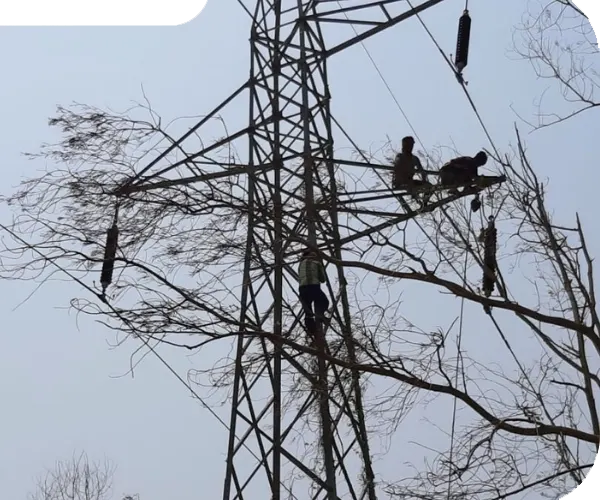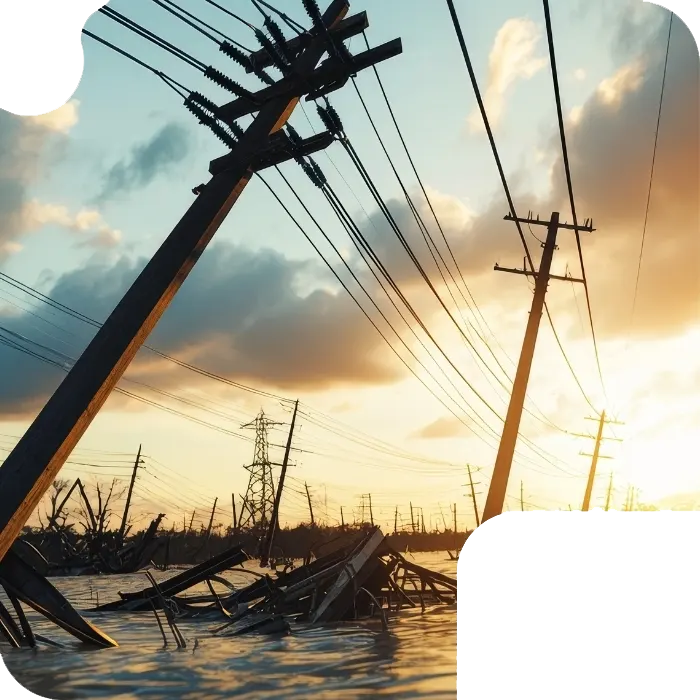
HTSE provides rapid Transmission Tower Collapse Restoration and Storm Damaged Power Line Restoration using IEEE 1070 & IEC certified Emergency Restoration System (ERS) towers. We survey, engineer, transport and erect temporary bypass towers for 33 kV–800 kV transmission lines, restoring power quickly while your permanent structure is rebuilt.
Every hour of downtime increases revenue loss, contractual penalties and operational risk. HTSE restores critical transmission lines by deploying IEEE 1070 & IEC certified Emergency Restoration System (ERS) towers that bypass the collapsed structure while the permanent tower is rebuilt. Our modular solution requires no heavy cranes or civil foundations, reducing restoration time, project costs and business disruption.
Once your permanent structure is restored, we dismantle the ERS and take it away. You pay for the restoration itself.
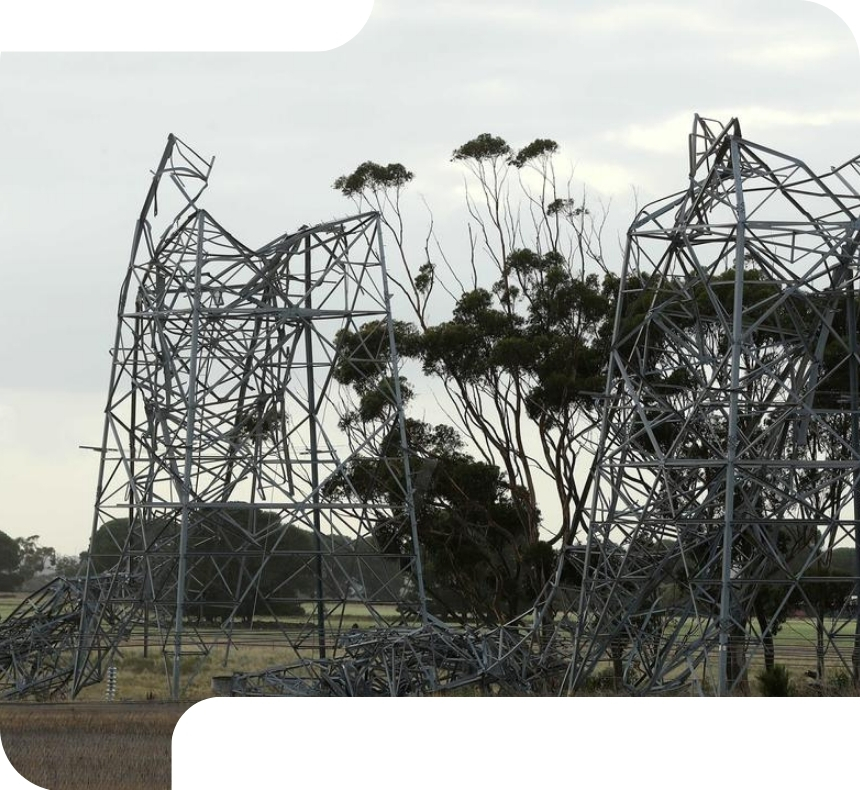
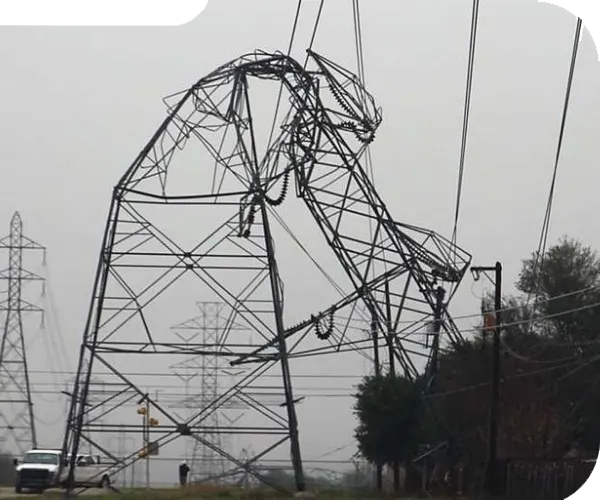
From cyclone damage and floods to structural failures, HTSE delivers fast Tower Collapse Restoration and Storm Damaged Power Line Restoration to restore critical transmission lines with minimal downtime.
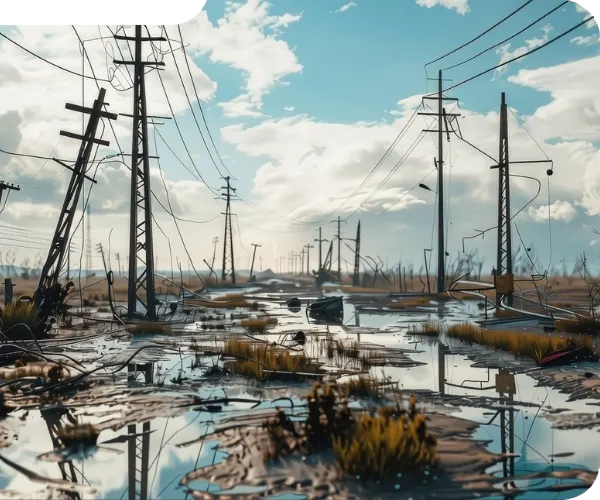
On a 400 kV line in Eastern India, floodwater and marshland left no road to site. HTSE ferried materials by country boat, anchored twin ERS towers in unstable soil and restored a full double circuit that stayed safe and secure six months on.
From disaster recovery to planned upgrades, HTSE ERS towers keep power flowing while permanent structures are restored or improved.
Restore critical transmission lines without investing in equipment. HTSE mobilises an IEEE 1070-certified ERS, completes Tower Collapse Restoration and removes the system after the permanent structure is rebuilt—so you pay only for the restoration, not the inventory.
Own an IEEE 1070 & IEC certified ERS Tower system for rapid deployment across 33 kV-800 kV transmission lines. HTSE supplies a complete Emergency Restoration System with custom engineering, commissioning, crew training and technical support so your organisation is always prepared for emergency restoration and planned maintenance.
Most transmission tower collapses come from extreme weather and ground failure: cyclonic winds, foundation washout during floods, landslides and ice or conductor overload. Sabotage and conflict damage account for the rest. Whatever the cause, an ERS bypass restores the line while the permanent structure is investigated and rebuilt.
Yes. An ERS bypass is built beside the failed structure, so the line is back in service before the wreckage is removed. Your crews can then clear debris and rebuild the permanent tower without the pressure of a live outage, because the ERS is already carrying the load.
Tower collapse restoration with an ERS takes hours to a few days, against the four to eight weeks a permanent tower needs. The ERS uses no concrete foundation and no heavy machinery, so it goes up on ground a rebuild couldn’t start on yet. The permanent structure is then built to full spec while the ERS holds the line.
HTSE can deploy multiple ERS sets in a single event and each bypass spans the gap left by one or more collapsed towers. For wide area cyclone damage we prioritise the corridors that restore the most load first, then work through the rest as crews and inventory mobilise.
The fastest start comes from four things: the line’s voltage class, the span and terrain at the failure, the number of structures down and site access. Even rough figures let a HTSE supervisor size the bypass and mobilise while your team confirms the rest. Photos or coordinates help us plan the route.
Yes, as ERS needs no concrete curing and no cranes, crews can work in conditions that stop a conventional rebuild, including marshy ground and boat-only access. HTSE assesses crew safety first, then deploys as soon as the site allows, which is usually far sooner than a permanent rebuild could begin.
Call our emergency desk now for rapid tower-collapse recovery. We respond 24/7, pan-India.